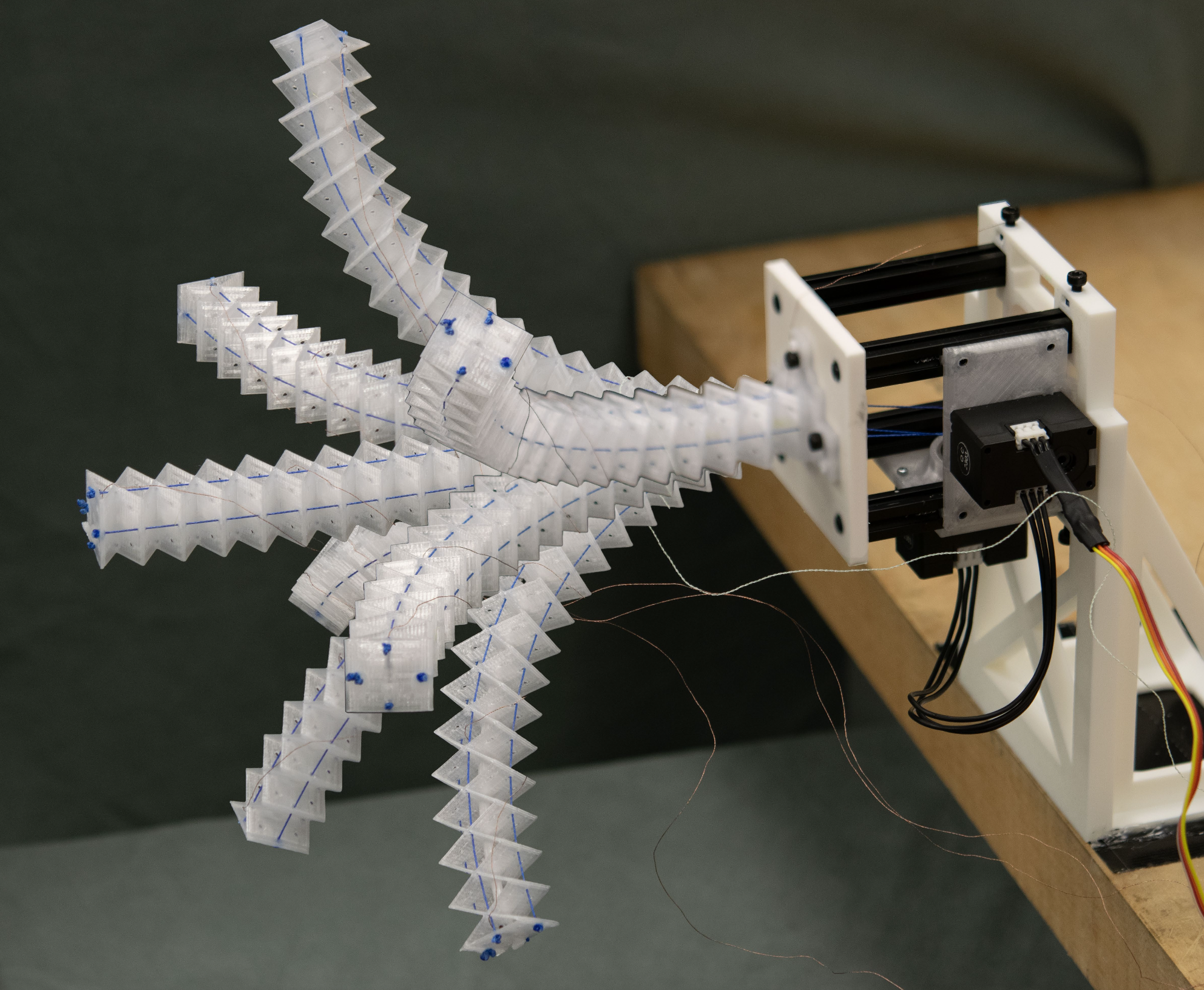
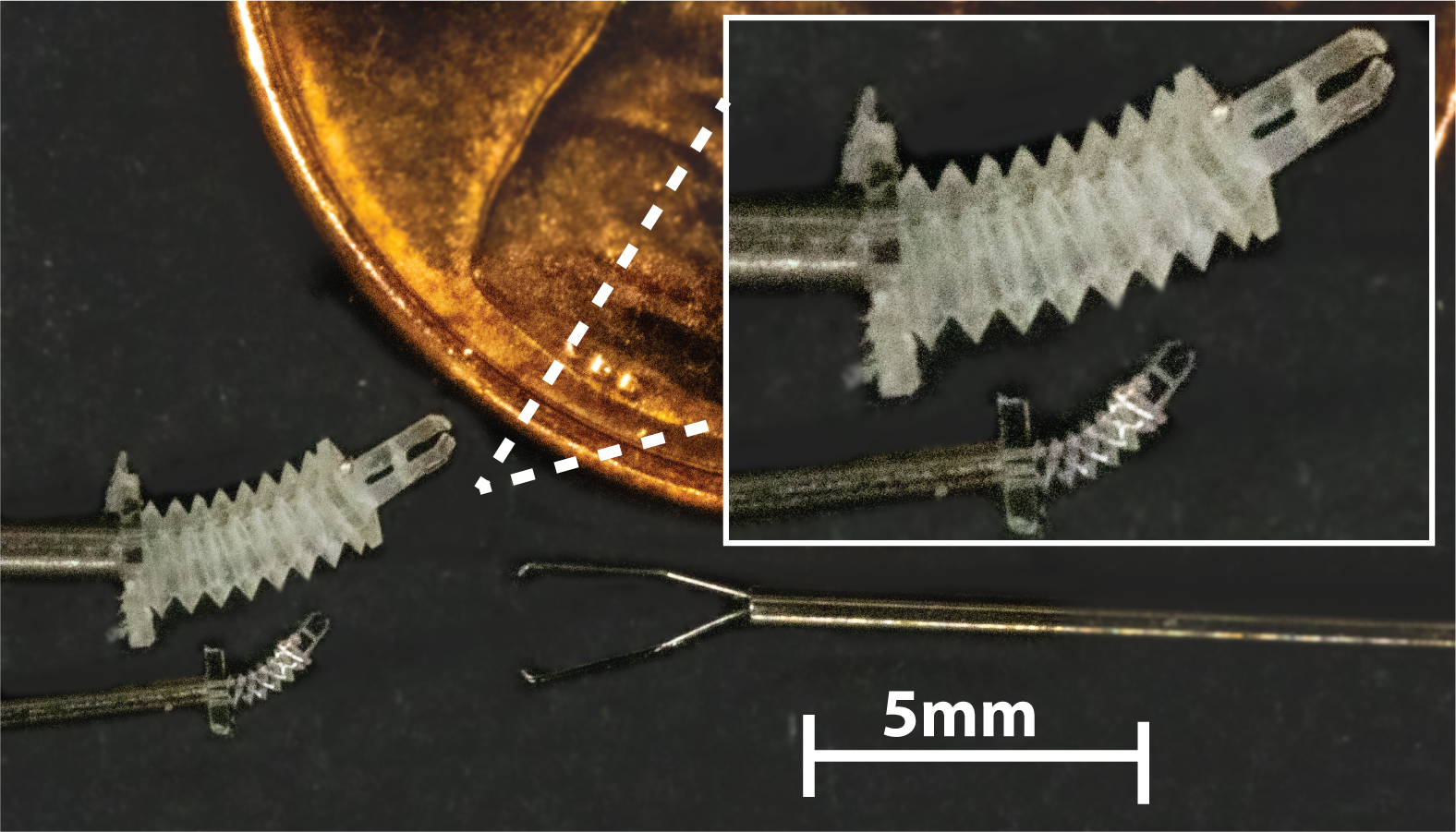
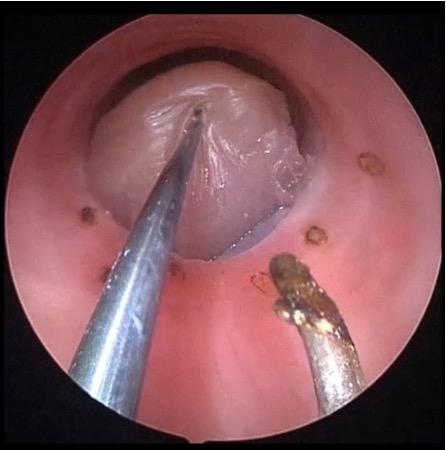
Our research lies at the intersection of robotics, algorithms, and medicine. We build autonomous surgical systems, advance continuum robot planning and control, and develop microsurgical robots that operate at the limits of human dexterity — all in service of improving patient outcomes.
We develop autonomous and semi-autonomous robotic systems capable of performing surgical tasks with minimal human intervention. Our research combines motion planning, perception, and decision-making to enable robots to reason about and act within complex, dynamic surgical environments.
A central challenge is ensuring that autonomous actions are safe, verifiable, and appropriately deferential to the surgeon's intent. We investigate shared autonomy frameworks that allow robots to take initiative on well-understood subtasks while keeping humans in the loop for high-stakes decisions.
Our planners are designed to operate in real time and to scale to the high-dimensional configuration spaces characteristic of surgical robotic systems.
Continuum robots — including concentric tube robots, steerable needles, and tendon-actuated flexible systems — can navigate through natural body orifices or tiny incisions to access anatomy that is unreachable with rigid instruments, dramatically reducing the invasiveness of surgical procedures.
Planning motions for these systems presents unique algorithmic challenges. Many continuum robots have uncertain, computationally expensive shape models, and they operate inside delicate anatomical structures where any collision can be catastrophic. Our research develops planning algorithms that explicitly account for model uncertainty, anatomical constraints, and real-time performance requirements.
We collaborate with clinicians and biomedical engineers to translate these algorithms into systems capable of assisting with real surgical procedures.
Images coming soon
Microsurgery demands a level of precision and dexterity far beyond unassisted human capability. Robotic microsurgical systems can filter hand tremor, scale movements, and provide haptic feedback — enabling procedures on structures measured in microns that would otherwise be impossible.
We design and develop planning and control algorithms for robotic systems that operate at the microscale, targeting applications such as retinal surgery, inner ear procedures, and repair of fine vasculature. Our work addresses the unique sensing, actuation, and modeling challenges that arise at this scale.
This research connects robotics, microsystems engineering, and clinical medicine to push the boundaries of what is surgically possible.
Images coming soon
Explore our publications on Google Scholar or visit the publications page for a curated list.
Publications Google Scholar